
Case study · Google Business Profile
Twice the local visibility in six weeks, while the market rose 20%.
A personal injury firm with a Google Business Profile that nobody was feeding. We started publishing one specific, practice-area post to it every week. Six weeks later the listing was showing up in search twice as often as before, against a 20% rise for comparable listings that posted nothing.
Real client listing. Figures are indexed from Google Search Console; the client's name is withheld.
+109%
Listing impressions, six weeks of weekly posts against the six weeks before.
+20%
Comparable listings over the same weeks, with no posts. The market lift, for scale.
3.8x
Listing impressions on searches about the topics the posts covered.
The numbers
The listing pulled away from the market.
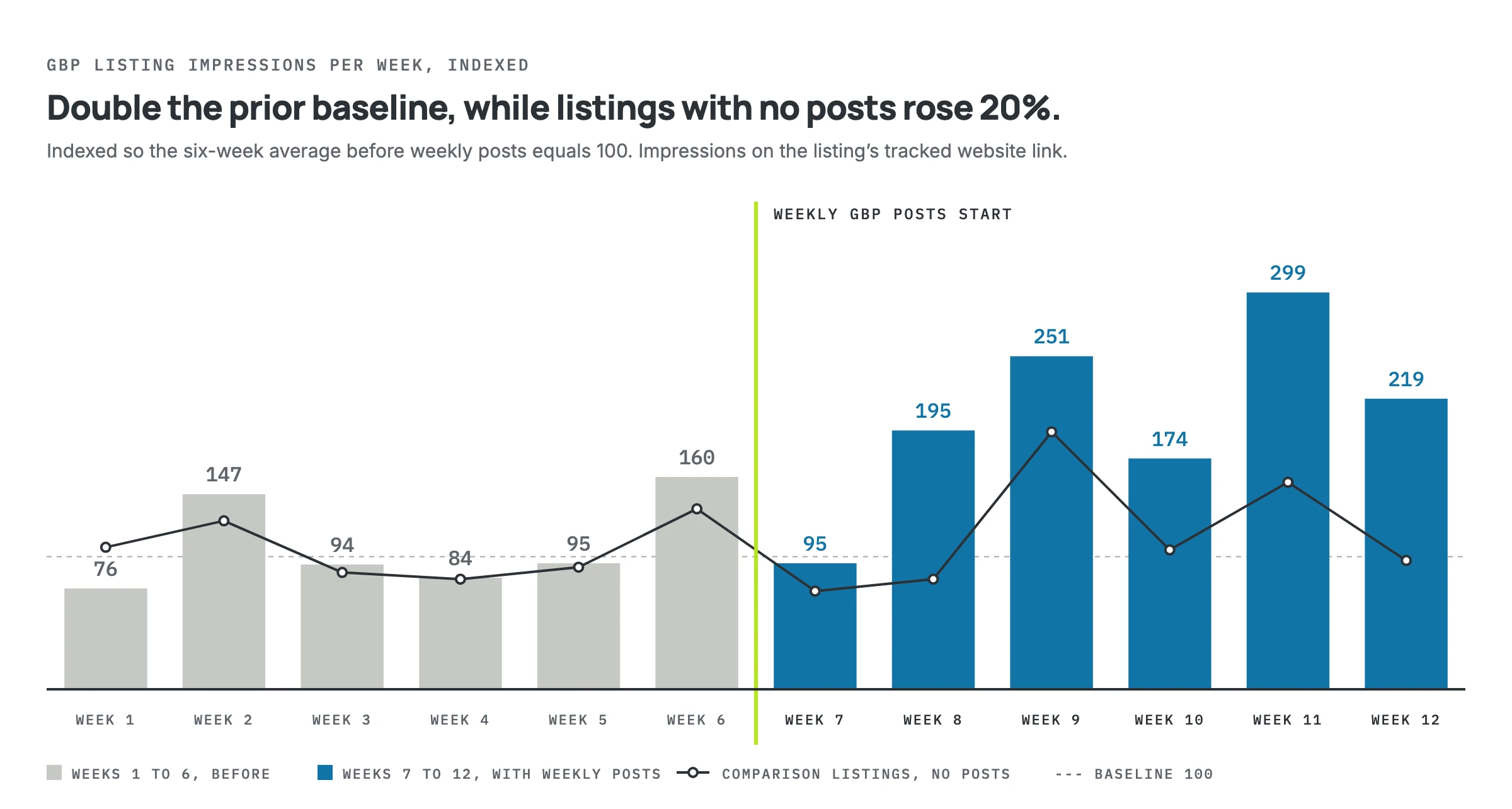
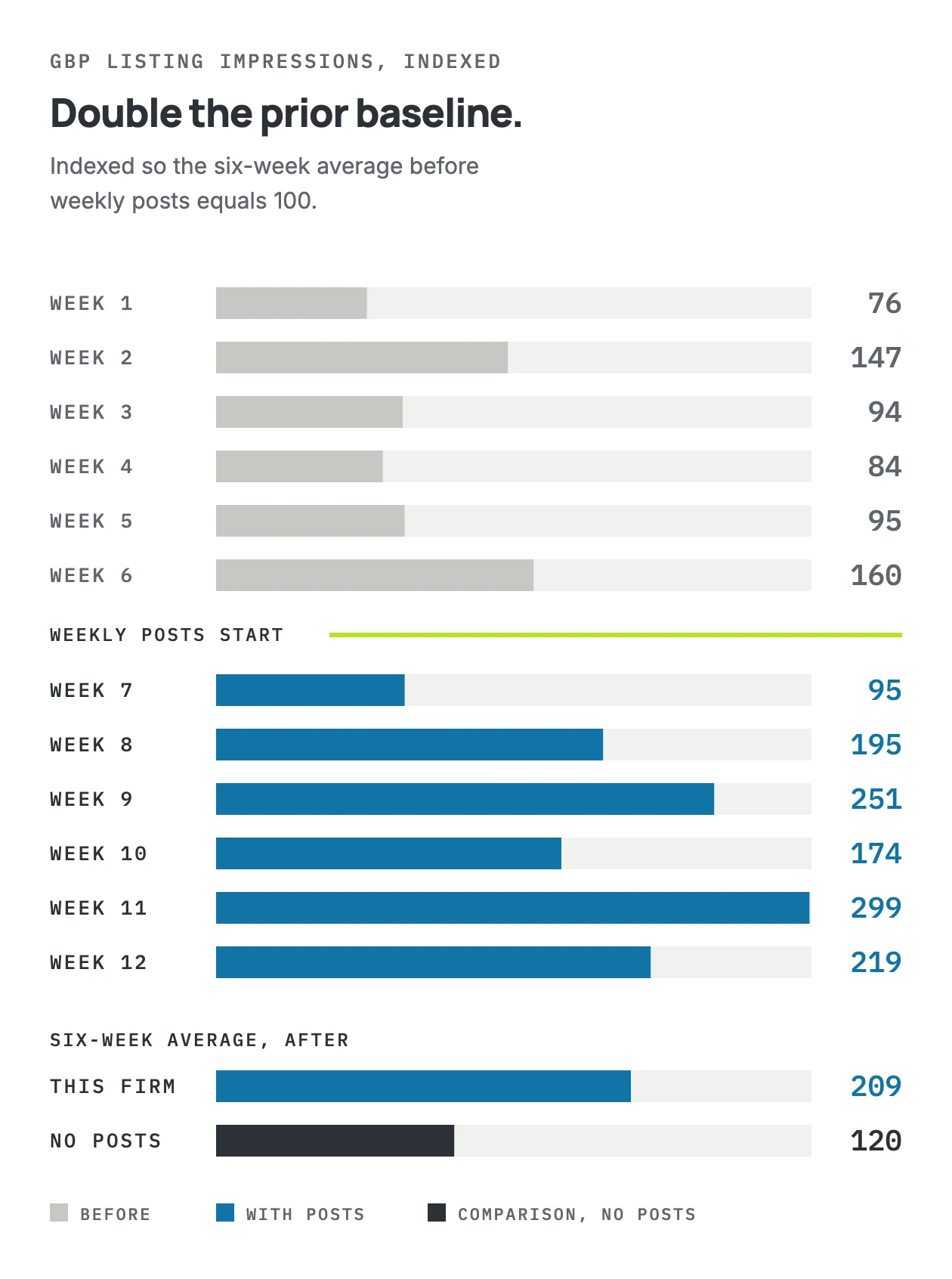
Impressions on the listing's tracked website link in Google Search Console, per week, indexed so the six weeks before weekly posts equal 100. The comparison group is another personal injury firm's listings in other markets, which published no posts over the same weeks.
The challenge
A listing that said nothing about what the firm actually does.
For a local law firm, the Google Business Profile is often the most visible thing it owns. It shows in the map pack and the business panel for searches the website never ranks for. This firm's website had almost no search visibility of its own, so nearly everything prospects saw of it in Google came through the listing.
But the profile sat untouched. It surfaced mostly for broad searches like "personal injury lawyer", and rarely for the specific matters the firm wants: workers' compensation, medical malpractice, dog bites, construction injuries. Nothing on the listing told Google it handled them.
The work
One specific post, every week.
- A practice-area question, answered on the profile. Each week the listing got a post on one specific question a client asks: can you sue your employer after a work injury, who pays for a dog bite, how long you have to file for medical malpractice, what an injured 1099 construction worker can claim.
- Paired with a full article on the site. Every post linked to an in-depth article on the same question, written for search and AI answers, with every legal figure checked against the statute before it went live.
- Measured so the listing could be read on its own. The listing's website link carries its own tracking, so its visibility in Google can be separated from the website's, and set against comparable listings that were not posting.
Outcome
The results.
Over the six weeks with weekly posts, the listing's impressions rose 109% against the six weeks before, with the listing holding an average position near 3. Comparable listings that published nothing rose 20% over the same weeks, so most of the gain is the firm's own.
The gain landed where the posts pointed. Impressions on searches about the posts' topics rose 3.8 times, led by workers' compensation, up roughly eight times, and medical malpractice, up roughly six times.
The website itself was flat over the same weeks. The new articles are still too young to rank, so this result is the listing's alone. They are the next thing we are watching.
Why it worked
A listing that posts about workers' comp every week gives Google a reason to show it for workers' comp. A listing that posts nothing is left competing on the business name.
Next step
Different business, same question.
What is your search and paid spend actually producing? We will look, then tell you plainly what we would change first.