
Case study · Solar and LED products, ecommerce
A revenue decline reversed by rebuilding the product feed.
A family-run supplier of solar and LED products was advertising its catalog flat, pushing every product evenly regardless of sales velocity or margin. We rebuilt the feed for query relevance and weighted spend toward the products that actually earn.
Figures are reported from the client's own accounts and dashboards.
+139%
Google Ads revenue. It more than doubled as feed relevance and product prioritization improved.
+32%
Return on ad spend, on a deliberately larger budget.
58% lower
Cost per acquisition, down by more than half.
The numbers
Every metric moved the right way.
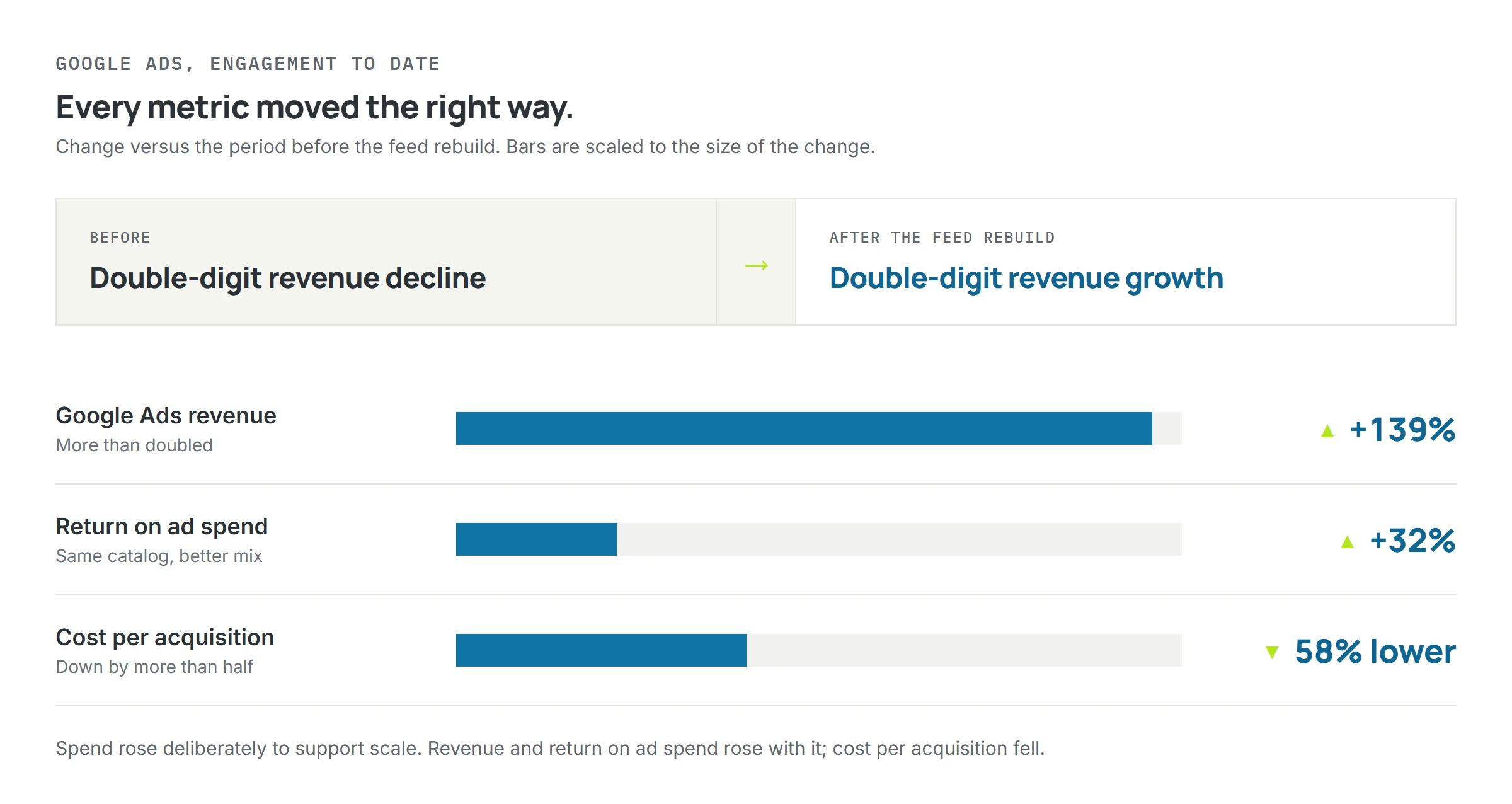
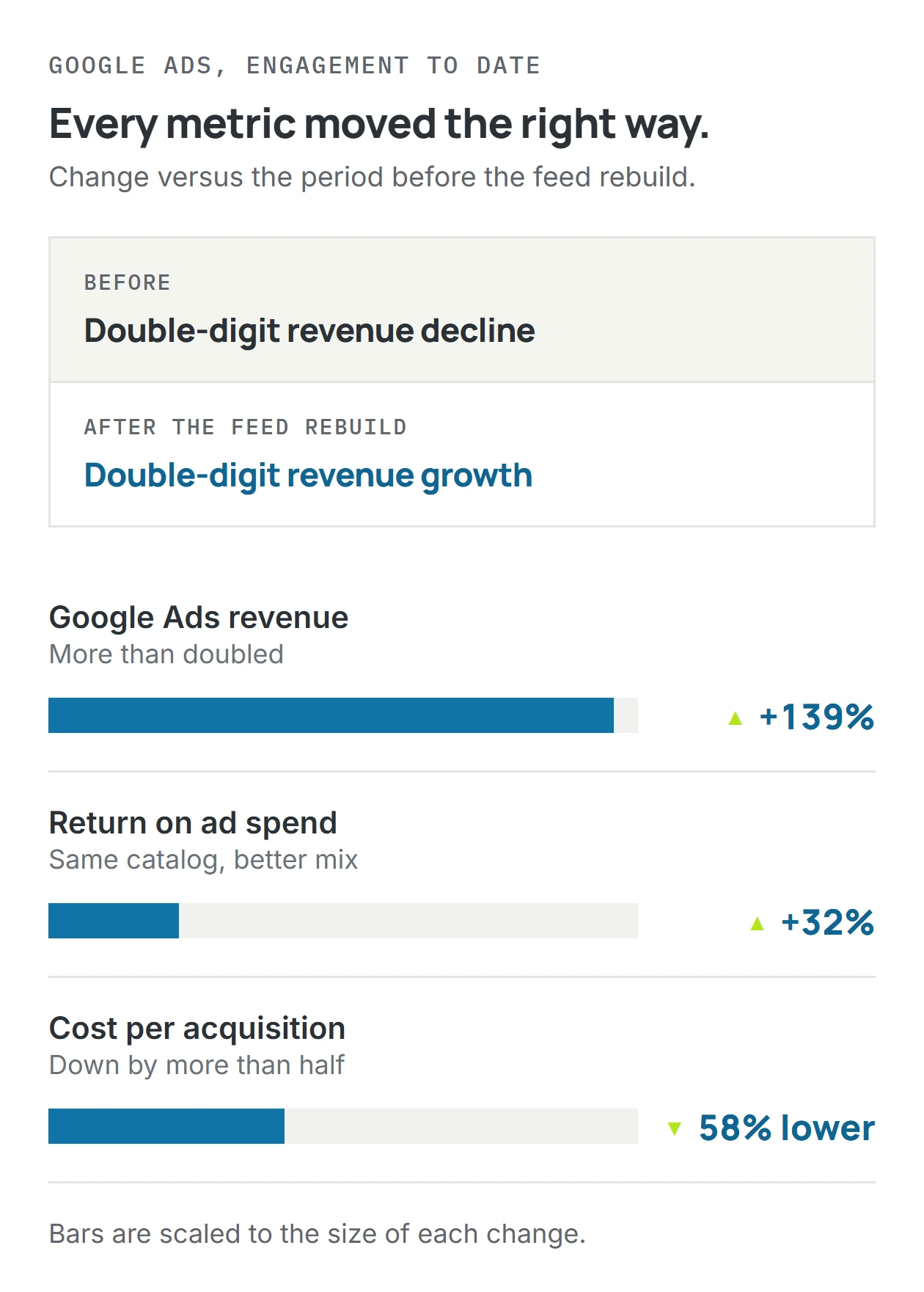
Change versus the period before the feed rebuild. Bars are scaled to the size of each change, not to a shared axis. Spend rose deliberately to support scale.
The challenge
A flat catalog cannot scale.
Revenue was declining at a double-digit rate, driven by inefficient product-level advertising.
The previous paid strategy treated the catalog as if every product were equal. Budget went to products that were not earning it, the proven sellers were not getting the visibility they deserved, and the account had no room to scale efficiently.
The work
What we did.
- Rebuilt the data feed. We rewrote and standardized product titles and descriptions to match high-intent searches, added and normalized key attributes such as material and color, and structured feed content to improve query matching and product-level relevance.
- Prioritized by profit, not by product count. Budget and visibility went to proven best sellers and higher-margin products. Lower performers stopped consuming budget without sufficient return.
- Restructured Shopping around performance. We separated products into groups and gave each group its own targets, so the top performers could take more clicks while everything else still sold, at a more efficient rate than before.
Outcome
The results.
Before the work, revenue was declining at a double-digit rate. After it, revenue returned to double-digit growth.
Inside Google Ads, revenue more than doubled at +139%. Spend increased deliberately to support that growth, return on ad spend improved 32%, and cost per acquisition fell 58%.
Why it worked
Most catalogs are not equal, and advertising them as if they were creates waste. We would rather give intent to specific buckets than spray budget across every product and hope.
Next step
Different business, same question.
What is your search and paid spend actually producing? We will look, then tell you plainly what we would change first.